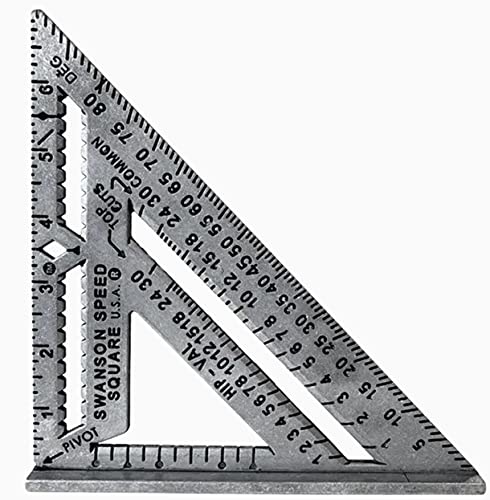
Measuring and Layout — FAQ
What size speed square should a homeowner buy first?
Start with a 7-inch square. It handles 90% of DIY tasks including framing walls, marking 2x4s, and checking angles. The compact size fits tool belts and costs less. Add a 12-inch later if you tackle stairs, wide rafters, or large decks.
Is Swanson really better than other brands?
Swanson invented the speed square in 1925 and remains the industry standard. Their markings are more precise, aluminum is thicker, and the Blue Book is unmatched. However, brands like Mr. Pen offer decent budget alternatives for light use. For daily use, Swanson's durability justifies the premium.
Do I actually need the Blue Book?
If you're cutting rafters, building stairs, or calculating roof pitch, absolutely. The Blue Book eliminates guesswork with pre-calculated tables. For basic angle marking and cross-cutting, you can skip it. Most homeowners find it useful at least once per project.
What's the difference between a speed square and rafter square?
Nothing—they're the same tool. "Speed square" is Swanson's trademarked name; "rafter square" is the generic term. Both are triangular layout tools with a lip that hooks onto lumber edges for quick 90° and 45° marks plus angle finding.
How do I use the scribe notches?
Can I use a speed square for finish carpentry?
Yes, but choose appropriately. The 4.5-inch trim square excels for finish work—its compact size fits inside cabinets and tight corners. Larger squares are too bulky for crown molding or baseboard detail. Consider a dedicated trim square for precision finish projects.