Hand Tools — FAQ
What size wood chisel set should a beginner buy?
Start with four essential sizes: 1/4", 1/2", 3/4", and 1". These handle 90% of beginner tasks from detail work to heavy chopping. Avoid large sets with obscure sizes you won't use for years—master the fundamentals first.
How do I sharpen wood chisels as a beginner?
Use a honing guide to maintain a 25° bevel angle. Start with a 400-grit stone to repair nicks, then polish on a 1000-grit stone. Strop on leather with green compound between sessions. Most beginners damage edges by freehand grinding—always use a guide until you develop muscle memory.
What's the difference between Cr-V and high-carbon steel?
Cr-V (chromium-vanadium) steel adds alloying elements for better toughness and corrosion resistance. It holds an edge longer than basic high-carbon steel and resists chipping when struck off-center. For beginners, Cr-V forgives mistakes that would ruin more brittle high-carbon blades.
Do I need a mallet or can I use a hammer with chisels?
Always use a wooden or rubber mallet—never a steel hammer. Hammers concentrate force in one spot, causing handles to split and blades to mushroom. Mallets distribute impact evenly and provide better control. Look for chisels with steel-capped handles designed for mallet work.
Should I buy a budget set or invest in premium chisels?
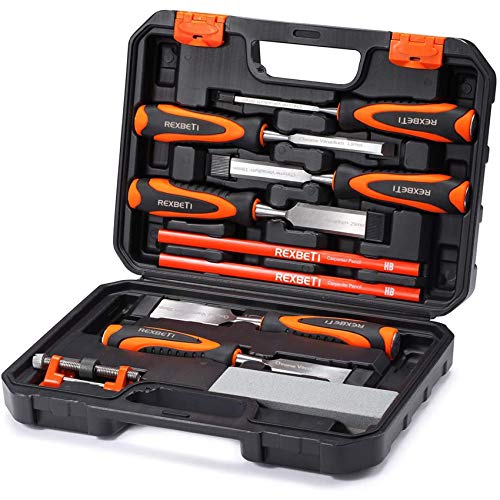
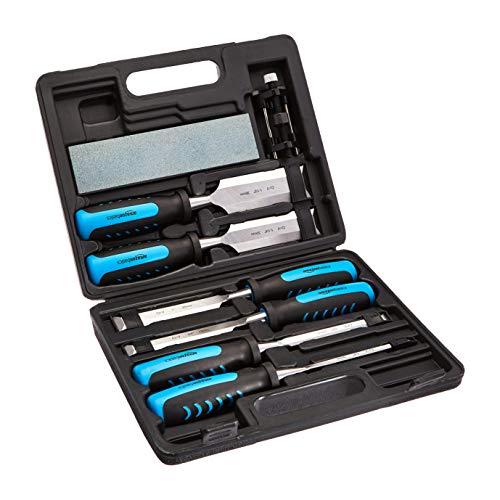
Buy a quality budget set with sharpening accessories first. Premium chisels ($50+ each) reward skilled technique that beginners haven't developed. A $40-60 starter kit with Cr-V steel, proper handles, and a honing guide teaches you maintenance skills without wasting money on features you can't yet appreciate.
How do I maintain my chisel set?
Wipe blades with camellia oil after use to prevent rust. Store in a canvas roll or wall rack—never loose in a drawer. Strop before each session, not after dulling. Flatten the back once when new, then only touch up the bevel. Proper maintenance makes a $50 set perform like $200 tools.